Sesame Street Alphabet Kitchen
Overview
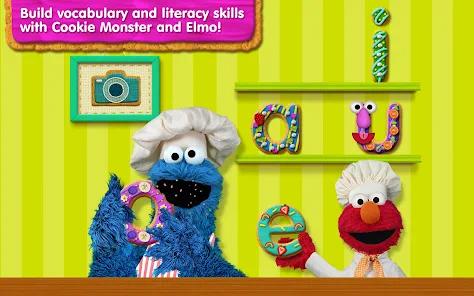
Sesame Street Alphabet Kitchen is an exemplary model of "Literacy through Roleplay," developed by Sesame Workshop. The app features the iconic voices and characters of Elmo and Cookie Monster, placing children in a digital kitchen where they "bake" words using letter-shaped cookies. The primary educational objective is to teach children about vowel sounds and word blending—two of the most critical foundational skills for early readers.
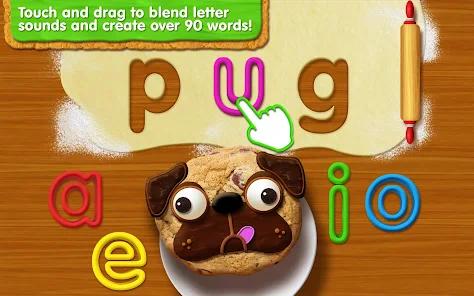
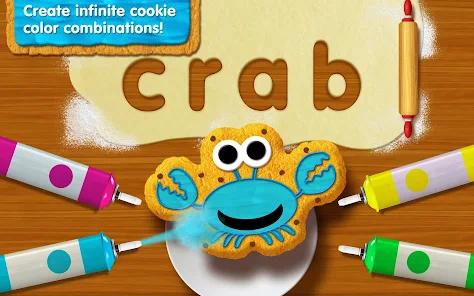
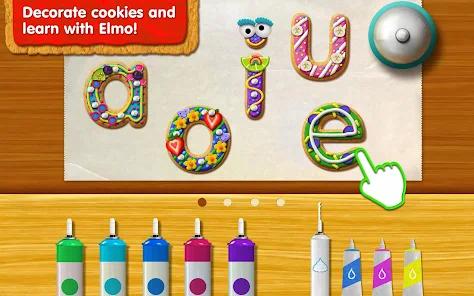
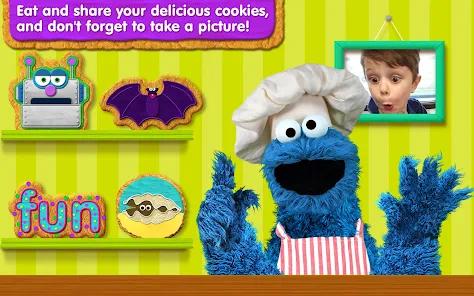
The feature breakdown centers on a three-stage "Baking Cycle." First, children select vowels to complete CVC (Consonant-Vowel-Consonant) words like "bat" or "bag". Second, they decorate their letter cookies with colorful frostings, whipped cream, and "silly facial features," which provides a creative reward for the literacy task. Finally, they "eat" the cookies or share them with Cookie Monster, who provides hilarious, character-accurate feedback. This cycle effectively uses "positive reinforcement roleplay" to make the relatively abstract concept of vowel sounds concrete and fun. The app also includes a "Cookie Coloring" mode and a photo-taking feature, allowing children to preserve their culinary and linguistic creations.
Alphabet Kitchen’s emphases on "Vowel Awareness." This app focuses on how vowels change words (e.g., changing "bat" to "bit"), a higher-order phonics skill. Historically, the app was a pioneer in "Phygital Play" through its support of Tiggly physical letter blocks, though recent updates have moved toward a purely touch-based model. Despite some user pushback regarding a newer paywall for content that was previously free, the app remains a "Trusted Program" that complies with the Play Families Policy and provides a safe, ad-free world for Sesame Street fans.
Pros & Cons
Authentic "Sesame Street" experience with the real voices of Elmo and Cookie Monster for high engagement.
Highly effective phonics curriculum focusing specifically on vowel blending and CVC word construction.
"Sharing" mechanic with Cookie Monster teaches children basic social-emotional concepts like generosity and interaction.
Includes creative "decoration" phases that allow children to express themselves through digital food art.
Completely ad-free and data-secure, strictly following the Play Families Policy.
Simple, mess-free "baking" simulation is perfect for introducing toddlers to the tools and processes of a kitchen.
- ✕
Many long-time users are unhappy that the app moved from a free model to a paywalled model for most word-building levels.
- ✕
The removal of Tiggly peripheral support has disappointed families who owned the physical letter toys.
- ✕
Limited word variety, with some users reporting that the app doesn't include enough 4-letter blends.
Download
 Get it on Google Play
  Get it on App Store
 FAQs
Does it teach the whole alphabet?
The primary focus is on vowels and how they blend with consonants to form 3- and 4-letter words.
Can I use Tiggly letters?
No, recent versions of Alphabet Kitchen have removed support for Tiggly physical hardware.
Is it safe for preschoolers?
Yes, it is 100% ad-free and designed specifically for ages 2–5.
How do I "eat" the cookies?
Children can tap on the cookies they’ve made to "bite" them or drag them to Cookie Monster.
Does it work offline?
Yes, once the app content is downloaded, the baking activities are available without Wi-Fi.
Hot Reviews
Parents report that their children began identifying vowel sounds in real-world words after just a few sessions of baking with Elmo.
Multiple reviewers highlight that the "sharing with Cookie Monster" part is their child's favorite, often leading to lots of laughter and repeat play.
Recent reviews are mixed, with many parents expressing frustration that they have to pay to unlock levels that their children had already played previously.