
Rosetta Stone: Learn Languages



Overview
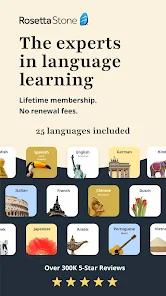
Rosetta Stone, an enterprise has influenced the computer-assisted language learning (CALL) market since its founding in 1992. Currently operating as a division of IXL Learning, the brand is centered on its trademarked "Dynamic Immersion" methodology. This pedagogical approach aims to simulate natural first-language (L1) acquisition by completely removing translation, bilingual dictionaries, and explicit grammar rules in the native tongue from the educational journey. Instead, learners are presented with systematic configurations of high-quality photographic images paired with target-language audio and text, forcing the cognitive development of direct conceptual associations.
The course is structured across 20 thematic units, with each unit divided into four core lessons. These lessons cover speaking, reading, listening, and writing. Historically a desktop-bound program, the mobile interface has undergone a major shift under the "Sapphire" branding. This transition prioritizes a mobile-first user experience by breaking long lessons down into bite-sized segments. The shift also introduces artificial intelligence features and a streamlined layout to reduce friction during short, daily study sessions.
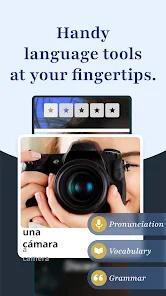
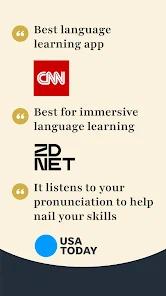
A central component of the mobile application is the "TruAccent" speech-recognition engine. This tool provides immediate, pass-or-fail pronunciation feedback by comparing user vocal input against native-speaker databases. While the tool is useful for building phonetic confidence, it works best when paired with supplementary speaking tools. It does not offer open-ended, natural-speed conversation practice. Additionally, the inductive grammar model can sometimes lead to cognitive fatigue for adult learners. Without explicit, structured explanations of syntax and rules, users can struggle to grasp complex grammar systems, particularly in highly inflected or non-Latin writing systems.
Pros & Cons
The translation-free Dynamic Immersion model trains learners to think directly in the target language, helping to eliminate mental translation loops.
The proprietary TruAccent speech engine offers real-time, adjustable feedback that helps learners refine their pronunciation.
The application features an "Extended Learning" hub with downloadable audio companions and recordable story exercises.
The clean, ad-free user interface helps learners stay focused without distracting gamification elements.
High-quality photography provides clear, realistic context to make vocabulary and syntax easier to recall.
- ✕
The highly repetitive, slow-paced lesson design can feel tedious for intermediate and advanced learners.
- ✕
The lack of a diagnostic placement test forces users with prior experience to navigate through simple beginner material.
- ✕
The app does not include interactive, open-ended conversational practice or natural-speed audio models.
- ✕
The subscription plans are relatively expensive, and recent updates have restricted features for some lifetime accounts.
Download


FAQs
How does the Dynamic Immersion model teach complex grammar rules without using translation?
The system uses inductive pattern recognition. By showing the same syntax across various visual and auditory contexts, the app helps learners naturally deduce grammar rules like pluralization, verb conjugation, and gender agreement without formal, native-language explanations.
Can the core language lessons be completed without an active internet connection?
Yes, the application supports offline learning. Users can download lessons and core modules directly to their device, and the app also offers a downloadable "Audio Companion" to practice pronunciation on the go.
Does the TruAccent system adjust for regional dialects or speech variations?
Yes, users can adjust the sensitivity of the TruAccent speech-recognition engine in the app settings. This helps accommodate regional pronunciation differences or assist early-stage learners who find the default settings too strict.
Why was the placement test omitted from the mobile application?
The developers designed the platform with a sequential learning philosophy, assuming that reviewing foundational elements builds stronger language skills. However, this can feel repetitive for intermediate speakers.
How do the Sapphire update features impact users with older, legacy lifetime subscriptions?
Some users with legacy lifetime subscriptions may find that newer Sapphire mobile features, such as specific AI tools and shortened lessons, are restricted to newer subscription models.
Hot Reviews
The visual immersion method is highly effective for building an initial vocabulary without translation. However, the complete lack of explicit grammar notes can make it incredibly frustrating when trying to understand complex word-order rules.
The clean design and lack of ads make for a great learning environment. However, the TruAccent system can be inconsistent—sometimes rejecting perfectly accurate speech or passing poor pronunciations, which disrupts the learning flow.
This app is an excellent starting point for absolute beginners. However, the slow, repetitive lessons and the lack of a placement test make it feel tedious for anyone who already has a basic grasp of the language.