
BeenVerified Background Search
Overview
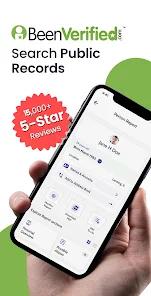
BeenVerified Background Search is an aggregation tool designed to provide consumer access to public record databases across the United States. Operating since 2007, the service simplifies public records access by compiling historical records into unified reports.
Because public records are scattered across municipal offices, county courthouses, state record departments, and federal archives, searching them manually can be highly inefficient. BeenVerified addresses this by using web crawlers and data ingestion pipelines to scrape public records continuously.
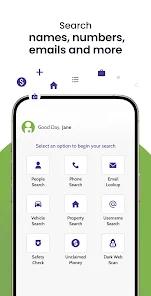
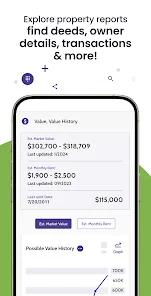
When a user submits a query—such as a first and last name, cell phone number, home address, email identifier, or vehicle identification number (VIN)—the platform queries its indexed database of billions of data points. The system's machine learning models then match, clean, and resolve conflicting data entries to generate a single report. This report can contain biographical details, age metrics, associated address histories, relative rosters, business affiliations, real estate values, mortgage filings, bankruptcies, criminal records, and court cases.
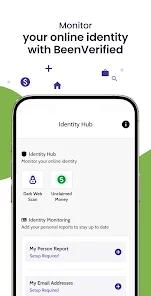
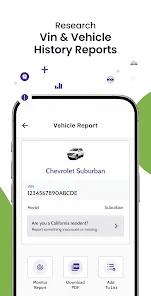
Additionally, BeenVerified provides unique utilities like vehicle lookups (revealing salvage records, accidents, or specifications via VIN) and unclaimed asset searches.
However, BeenVerified operates under strict regulatory constraints. The service is not a "Consumer Reporting Agency" as defined by the Fair Credit Reporting Act (FCRA). As a result, the reports are legally restricted to personal, non-professional use, and cannot be used to vet prospective employees, evaluate tenant candidates, or check credit eligibility.
In practice, data accuracy can vary due to differences in public records across jurisdictions. Missing middle names, common names, or delayed updates in county registries can lead to mixed profiles or outdated records.
Subscription management is another key area of user feedback, with many noting that the auto-renewal trial systems can lead to unintended billing charges if not canceled directly through the app store or billing settings.
Pros & Cons
Multi-Format Search Capability: Allows searches by name, phone number, address, email, or vehicle VIN under a single interface.
Wide Database Access: Aggregates billions of data points across public registries, court records, and property valuations.
Confidential Search Processing: Run search requests anonymously without alerting the search subject.
Integrated Vehicle History Utility: Retrieves salvage history, mileage benchmarks, and specifications from vehicle VIN entries.
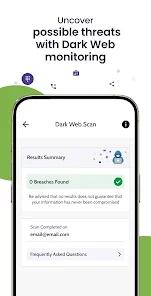
Cross-Platform Access: Mobile accounts include desktop access to additional database engines and dark web monitoring tools.
- ✕
No FCRA Vetting Authorization: Legal limits prohibit using the platform's reports for employment, credit, or tenant screening.
- ✕
No Permanent Free Search Tier: Accessing reports requires a paid subscription or trial sign-up, with most information paywalled.
- ✕
Complex Cancellation Processes: Many users report that canceling recurring auto-renewals requires navigating complex multi-stage phone or support settings.
- ✕
Inconsistent Profile Matching: Compilation errors occasionally occur due to common names or outdated public record databases.
Download
 Get it on Google Play
  Get it on App Store
 FAQs
Can I use BeenVerified to perform background checks on potential employees?
No. BeenVerified is not an FCRA-compliant consumer reporting agency. Using its data for employment, housing, or credit decisions is a violation of federal law.
How can I request that my records be removed from BeenVerified?
Users can submit an opt-out request directly on the BeenVerified website to remove their public record profiles from active search indexes.
How do I cancel my subscription on Android?
Subscriptions started through Google Play must be canceled directly via the Google Play Store’s Subscriptions menu, while web-direct subscriptions must be managed on the website or via customer support.
Why do some search reports contain outdated addresses or incorrect relatives?
BeenVerified compiles records from public sources, and variations in local municipal recording practices, missing dates of birth, or delayed database updates can occasionally cause matching errors.
What is the difference between a People Search and a Reverse Phone Lookup?
A People Search scans public records by first and last name, while a Reverse Phone Lookup identifies the name, location, and spam history associated with a specific telephone number.
Hot Reviews
Many users report billing disputes, noting that cancelling the automated recurring payments requires navigating a multi-stage process.
A common complaint center on data accuracy, with subscribers noting that paid search reports sometimes display long-resolved addresses or missing contact details.
Positive reviews frequently highlight peace of mind when screening unknown callers or verification ahead of blind online dates, allowing users to verify identities and scan for criminal histories before meeting.