Olio — Share More, Waste Less



Overview
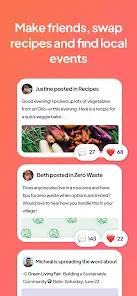
The global expansion of peer-to-peer (P2P) resource conservation platforms has driven the growth of local waste-reduction networks. Olio is a prominent example, designed to facilitate the cashless redistribution of surplus food and household assets directly within neighborhood communities. Originally launched in the United Kingdom to combat domestic food waste, the application has expanded into a global network with over nine million registered users. This growth highlights a broader consumer shift, where environmental preservation aligns with rising cost-of-living concerns. The platform has evolved from a simple food-sharing application into a comprehensive circular economy ecosystem that supports food redistribution, household item gifting, localized lending and borrowing, and commercial food rescue operations.
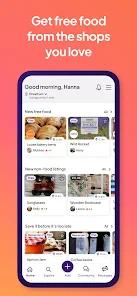
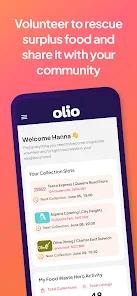
The functional design of the application is built on hyper-local geofencing. Users capture images of surplus assets—such as near-expiry groceries or unwanted household goods—input a description, and select a neighborhood pickup point. The platform's P2P messaging client then handles coordinate exchanges, helping to protect user privacy by avoiding the exposure of exact addresses. A key operational pillar of the platform is the "Food Waste Heroes" initiative, which coordinates and trains community volunteers to collect surplus stock from commercial partners like supermarkets and caterers. These volunteers catalog the food items on the app, making them available for local collection and preventing them from reaching landfills.
Unlike transactional commercial platforms that focus on discounted sales, Olio relies on a gift-economy model where almost all items are shared free of charge. This structure creates a high-trust community environment, though it makes the platform highly dependent on localized user density to remain viable.
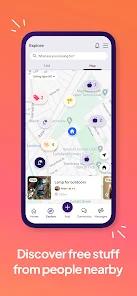
As a community-driven app, Olio manages highly sensitive user data, including real-time locations and personal contact information. A security analysis conducted by Oakland University revealed historical issues with backend data handling, specifically where account-deletion requests failed to completely erase profile records. While transmission encryption practices have improved, these findings highlight the privacy risks inherent in localized tracking applications. As the platform continues to scale, its long-term viability depends on balancing premium monetization features—such as map-based searches—with the accessible, community-first values that define its user base.
Pros & Cons
Evaluates and facilitates the zero-cost redistribution of edible food and physical household assets within a hyper-local radius.
Accelerates transactional turnover times, with a high percentage of listings requested and claimed in under two hours in active areas.
Utilizes a trained volunteer network to systematically integrate corporate commercial food waste into localized safety nets.
Enhances personal safety by offering variable pickup options, such as doorstep pick-ups or designated safe public zones.
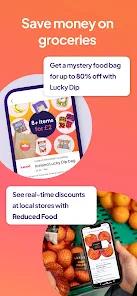
Integrates localized retail discounts directly into the user interface to combine P2P sharing with commercial food rescue options.
- ✕
Exhibits severe regional performance discrepancies, with negligible listings and zero community interaction in rural areas.
- ✕
Imposes monetization paywalls on fundamental platform functions, including direct map-based search parameters.
- ✕
Lacks notification categorization, making it difficult for users to separate crucial direct messages from automated system bots.
- ✕
Account-deletion queries have historically faced backend processing delays, exposing data retention risks.
Download


FAQs
How do listings get uploaded to the Olio platform?
Users take a clear photograph of the item, add a brief description, categorize it as food or non-food, and set a localized pickup spot. Neighbors can then browse, request the item, and coordinate pickup times via the internal chat system.
What is the operational purpose of the Food Waste Heroes program?
The program organizes community volunteers who undergo specialized training to collect unsold food from partnering supermarkets and local retailers. These volunteers then list the rescued food items on Olio for neighborhood allocation.
Is the platform completely free to use?
The core functions of listing, requesting, and collecting items are entirely free. However, Olio offers a paid premium subscription that unlocks advanced map filters, an ad-free interface, and localized search alerts.
How does the platform verify food safety and quality?
The application relies on community guidelines and self-regulation. Registered volunteers receive specific guidelines on food safety, while individual listers are legally and ethically responsible for representing the quality of food items accurately.
Can users request complete data erasure under privacy regulations?
Yes, the developer provides data deletion pathways. However, independent studies have noted that account-deletion requests can occasionally experience delays in removing all historical profile indicators from the databases.
Hot Reviews
The speed at which unwanted items are claimed is impressive, with listing-to-pickup times often taking less than two hours. It provides an exceptionally reliable way to clear out household clutter while directly helping nearby families.
While the platform's core concept is highly commendable, the persistent introduction of video ads and paywalls on standard features like map searches creates significant friction for users trying to give items away for free.
The application is highly effective in densely populated cities but loses practically all utility in rural or remote areas where listing density is low. It requires a critical mass of active local users to be useful.
The in-app communication portal is well-designed and allows for clear coordination. However, the system needs to allow users to disable bot messages so they can prioritize actual neighborhood communication.