
Choices: Stories You Play
Pixelberry's interactive-fiction heavyweight still writes some of the best branching stories on mobile — Blades of Light & Shadow genuinely plays like a choose-your-path tabletop RPG. But the honest catch has grown louder: a two-currency economy of Keys and Diamonds means the best paths increasingly ask for your wallet or your patience, while the retired Choice Pass and recent generative-AI art and pronoun-tracking bugs have soured a chunk of longtime readers.
- Visual-novel and interactive-fiction fans who love deeply branching romance, fantasy, horror, and drama with strong writing and deep character customization, and who'll happily spend Diamonds on premium choices or accept slower free progression
- Players who enjoy RPG-style stat and relationship systems wrapped around a story, and who want a huge, genre-spanning library with weekly chapter updates
- Readers who want the best story paths without spending — the premium diamond choices and slow key regeneration add up fast, and casual readers report the costs have become hard to justify
- Long-time fans upset by the retirement of the Choice Pass and the recent generative-AI art, and players who rely on accurate pronoun handling in customized runs given the current tracking bug




Overview
When Choices: Stories You Play is firing on all cylinders, it’s one of the best arguments on mobile for the interactive-fiction format: a book like Blades of Light & Shadow reads less like a phone game and more like a well-run tabletop RPG campaign, all branching quests and consequential decisions. That craft is why the app has held a 4.4 across nearly 1.3 million ratings. But the honest catch has grown louder over the last couple of updates, and it’s the first thing we want you clear-eyed about: the choices that matter most — the swooning romance beats, the big climactic resolutions — are overwhelmingly the ones that cost Diamonds, the premium currency, and getting into a chapter at all runs on Keys that trickle back slowly. The good story is genuine. So is the running tab.
What it actually is
Strip away the framing and Choices is Pixelberry Studios’ portal to serialized, choose-your-path visual novels, sitting in Google Play’s Adventure category with 50M+ installs behind it. The format is the classic interactive-fiction loop: you read illustrated dialogue frames, customize your protagonist, and hit decision prompts that fork the dialogue tree, shift your relationships, and steer you toward different endings. What sets it apart is breadth — the library spans genres most apps wouldn’t attempt under one roof: high fantasy in Blades of Light & Shadow, contemporary romance in The Nanny Affair, horror in Immortal Desires, legal drama in Laws of Attraction. New chapters arrive on a weekly cadence, so a book you’re following keeps growing, and Pixelberry’s long track record anchors it as a genre stalwart.
The writing is the reason to be here
The single best thing about Choices is the writing, and it has been for years. Recurring user feedback singles out the worldbuilding and dialogue — Blades of Light & Shadow in particular is described as a rich, choice-driven experience that feels like a tabletop RPG, with decisions that carry real weight. When Pixelberry’s writers are given room, the branching stories are genuinely well-constructed rather than the flimsy fork-in-the-road filler a lot of the genre ships. The range matters too: moving from a fantasy quest to a courtroom drama to a horror story inside one app, each with its own tone, is a real draw for anyone who reads widely.
The craft around the writing
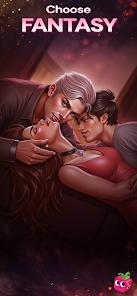
The presentation backs the writing up. Characters are drawn as detailed 2D illustrated sprites with dynamic expression states, so faces shift to mirror the emotion of a scene rather than sitting frozen — a small thing that aids immersion across a long chapter. Customization is deep: you can shape your protagonist’s hair, outfits, gender, and physical traits, and most contemporary books let you set pronouns as male, female, or non-binary, a genuine inclusivity strength we’ll return to. Many books also run an RPG-style layer underneath, tracking skills, items, and prestige points, so your stats and past decisions unlock or gate later moments and give your choices teeth. And each story carries its own musical score, which quietly does a lot of the emotional work.
The monetization reality
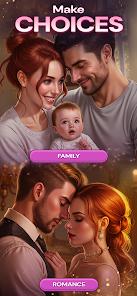
Now the part that will shape your experience more than anything else, so we’ll be blunt about it. Choices runs on two separate currencies, and between them they gate both getting into the story and getting the good parts of it. Keys unlock individual chapters; they regenerate passively, but slowly, so free-to-play readers routinely hit a wall and have to wait — or pay — to keep going. Diamonds are the premium currency, consumed to pick the “premium” narrative options: unique magic spells, romantic scenes, prestige actions, the more satisfying paths. In practice the choices you’ll most want to make are frequently behind a diamond cost, and major romance beats and big resolutions are routinely locked this way. The store’s own framing is candid that premium options yield the more satisfying outcomes, which is exactly the tension: the free path is playable, but the emotionally rewarding version of a book often isn’t free.
The louder half of this, in recurring feedback, is that the cost has inflated. Long-term readers describe premium-choice pricing as having climbed to the point that buying individual diamond packs no longer feels viable for a casual reader. We won’t quote specific diamond or key prices — the listing doesn’t give consistent ones and we won’t make them up — but the shape of the complaint is consistent: this is an expensive app to experience at its best.
What long-timers are unhappy about
Two recent platform changes have soured a chunk of the long-term audience, and both are documented in user sentiment rather than anything we’re speculating about. The first is the retirement of the “Choice Pass” — widely felt to be the most consumer-friendly part of the economy; users describe its removal as stripping away the best deal the app offered and, in effect, isolating players who don’t spend. The second is the integration of generative AI into the art pipeline, which — per recurring feedback and our own database — has introduced visual inconsistencies into recent character art and promo materials, a step down from the historically polished, hand-drawn look the app built its reputation on. One reassurance for the back catalog: per the app’s own FAQ, classic series keep their original hand-drawn art and aren’t being retrofitted with generative assets, so the concern is specific to newer material.
A quality bug worth naming
One issue deserves its own mention because it undercuts something the app otherwise does well. Choices genuinely supports full pronoun customization — male, female, and non-binary paths in most contemporary books — which is a real strength. But the same automated, AI-assisted editing pipeline has introduced a persistent bug: it frequently fails to keep gender-pronoun consistency across customized love-interest runs, so a character you’ve set up one way can be misgendered in the text further along. This is a QA and consistency defect, not a design choice, and it lands hardest on exactly the players who used the customization feature as intended. It’s the kind of thing Pixelberry’s hand-edited scripts historically got right; right now it’s a fixable but real rough edge on an otherwise thoughtful system.
Offline and sync
A couple of logistics worth knowing. Choices is not an offline app — it needs a network connection to download story assets and verify server-side transactions, so this isn’t one for a plane or a dead zone. On the upside, your progress travels: link a verified Google or Facebook account and your saves carry across devices.
How it compares
In the broader interactive-fiction and visual-novel category — apps built on serialized, choice-gated stories — Choices is a heavyweight rather than an outlier, and its two-currency, pay-for-the-good-choices model is fairly typical of the genre rather than unique to it. Where it distinguishes itself is production values and writing: the depth of the branching, the RPG-style stat systems, and the reactive art sit a cut above much of the field. We won’t name specific competitors, but if your priority is finishing stories cheaply, the whole category asks hard questions, and Choices is no exception.
A word on recency
On recency we’ll be straight: there’s no Google Play “last updated” date on the listing for us to cite, so we won’t pretend to one. What we can say is that the scale signals remain strong — 50M+ installs and a 4.4 average across roughly 1,292,122 ratings, with six screenshots on the listing — a serious, durable reception, and the weekly chapter cadence shows an app actively fed new content. Read that 4.4 with some nuance, though: a rating that high, built on well over a million votes across many years, holds up on sheer volume even as the more recent sentiment — about pricing, the Choice Pass, and the AI changes — has clearly dipped.
Our take
Choices is still one of the most capable interactive-fiction apps on mobile, and deep in a book like Blades of Light & Shadow it earns its reputation — the branching is meaningful, the art is expressive, the stat systems give your decisions weight, and the scores tie it together. The caveats are just as real and mostly point one direction: the two-currency economy means the best romance beats and biggest moments usually cost Diamonds, Keys throttle free progression, the well-liked Choice Pass is gone, generative AI has introduced art inconsistencies, and the pronoun-tracking bug undercuts a customization feature the app should be proud of. If you’re happy to spend on premium choices, or patient enough to play slowly for free, and you love deep, genre-spanning branching fiction, this is close to the best in its class. If you want the best paths without opening your wallet, you’re frustrated by slow key regeneration, you’re still smarting over the Choice Pass, or you rely on accurate pronoun handling in customized runs, go in knowing exactly what the current version asks of you.
How We Evaluate
We assess every app on the same checklist: what it actually delivers versus what it promises, how honest the pitch is, where real users hit friction, and who should look elsewhere. We did not conduct hands-on device testing of this app. This review is grounded in its own Google Play listing and description, its stated features (the illustrated decision-frame gameplay, the two-currency Keys-and-Diamonds economy, protagonist customization including gender and pronoun options, the RPG-style stat and relationship tracking, the reactive 2D character sprites, and the per-story musical scores), the developer FAQ, its store signals (a 4.4 rating across roughly 1,292,122 ratings and 50M+ installs, 6 screenshots, developer Pixelberry Studios, with no Google Play "last updated" date shown on the listing), the recurring themes in published user reviews — including the recent criticism over the retired Choice Pass and the generative-AI integration — and the app's public reputation as Pixelberry's flagship interactive-story platform. Where we cite user sentiment, we are reflecting documented recurring feedback rather than personal play sessions, and we do not attach star ratings to it.
Pros & Cons
Deep Narrative Diversity: The expansive library spans highly detailed fantasy, horror, and suspense stories updated with weekly chapters.
Reactive Character Art: High-quality 2D sprites utilize distinct expression states to accurately mirror the emotional shifts in dialogue.
Comprehensive Customization: Allows extensive modification of the main protagonist's hair, outfits, gender, and physical traits.
Tactical Stat Mechanics: RPG-style books track skills, items, and prestige points, moving the gameplay beyond basic visual novel tropes.
Immersive Sound Design: High-fidelity, story-specific background music enhances the atmospheric depth of romantic and action scenes.
- ✕
Prohibitive Premium Paywalls: Critical romance options and major narrative resolutions are routinely locked behind expensive diamond requirements.
- ✕
Generative Asset Flaws: Recent integration of AI pipelines has introduced visual inconsistencies in character artwork and promo materials.
- ✕
pronoun Tracking Bugs: Automated script editing frequently fails to maintain gender pronoun consistency across customized paths.
- ✕
Inflexible Key Gating: Passive regeneration of story entry keys is slow, limiting free-to-play progression speeds.
Download


FAQs
Are choices and story progress saved across different devices?
Yes, linking your player profile to a verified Google or Facebook account ensures cross-device save synchronization.
Can stories be played completely offline without internet?
No, Choices requires an active network connection to download asset files and verify server-side transactions.
What are the primary uses of Diamonds and Keys?
Keys are required to unlock individual story chapters, while Diamonds are consumed to select premium narrative paths and outfits.
How does the game handle protagonist gender customization?
Most contemporary books allow complete customization of pronouns, allowing players to choose male, female, or non-binary paths.
Are older books updated with the new generative art styles?
No, classic series retain their original, hand-drawn vector and painted art assets, preserving their original visual aesthetic.
Hot Reviews
The worldbuilding and interactive mechanics in Blades of Light & Shadow make it feel like a rich, choice-driven tabletop RPG.
The cost of choosing premium choices has become unmanageable; buying individual diamond packs is no longer viable for casual readers.
The pronoun errors and awkward generative art in recent updates detract from what used to be a highly polished story app.
Removing the Choice Pass has stripped away the most consumer-friendly feature on the platform, isolating non-paying users.