
Postmates - Food Delivery

Overview
The Postmates platform has evolved from an independent pioneer in the logistics gig economy into a specialized brand operating under the corporate umbrella of Uber Technologies, Inc. This structural alignment means that while the front-end user experience maintains the distinct Postmates brand identity, the underlying dispatch logic, driver network, and technical infrastructure are deeply unified with Uber's primary logistics layer. This integration provides Postmates with a vast, highly responsive delivery fleet capable of providing 24/7/365 coverage across thousands of urban centers.
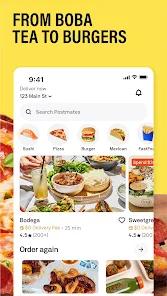
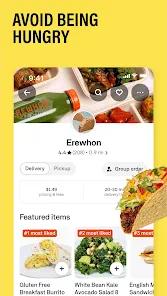
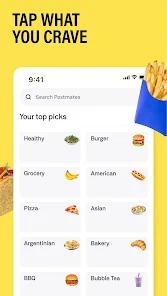
The platform’s functional ecosystem is anchored on a multi-vertical, on-demand catalog that extends far beyond traditional hot restaurant food. The design of the interface organizes merchants into primary sectors, including local dining, grocery supermarkets, convenience stores, and specialized retail boutiques such as beauty stores or pharmacies. This architecture relies on geolocation mapping APIs to dynamically generate merchant lists based on real-time driver proximity, operational hours, and current order volume. Users are presented with a search-driven interface where they can construct orders across varied inventories—ranging from household groceries like bread and milk to specific restaurant entrees.
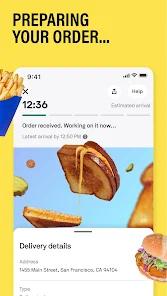
From a user journey perspective, the checkout flow leverages tokenized card storage, offering native integration with major payment processors. Upon order confirmation, the application transitions to an asynchronous tracking screen. This interface combines GPS-derived driver coordinates, merchant preparation status, and predictive ETA algorithms to keep the customer informed. The delivery phase itself can be configured for either standard handoff or contactless doorstep drop-off, supported by real-time notification push events when the driver arrives.
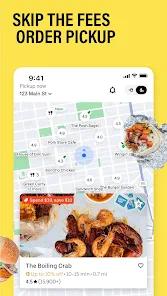
Additionally, the application offers a toggle for in-person pickup, bypassing the courier routing sequence to eliminate delivery and service surcharges. Despite these robust technical features, Postmates operates in a highly price-sensitive market. The premium pricing models utilized by third-party delivery apps—where menu item prices are frequently inflated over in-store rates, and added service fees can double the final transaction cost—introduce significant customer friction.
Pros & Cons
Multi-Vertical Merchant Coverage: Seamless access to hot meals, fresh groceries, daily prescriptions, and personal care products within a single unified shopping cart.
Omnipresent 24/7 Operational Schedule: Continuous service execution that runs throughout the night, limited only by the opening hours of local physical merchants.
Asynchronous GPS Courier Tracking: High-fidelity, real-time map visualization of the driver's physical location and route progress from the merchant to the delivery address.
Flexible Non-Contact Fulfillment: Integrated support for contactless drop-offs, backed by in-app messaging and delivery confirmation photo capture.
Bypass-Capable Local Pickup: Direct mechanism to place pickup orders, enabling users to customize orders ahead of time and avoid courier service fees.
- ✕
Compounded Fee Structure: Delivery fees, variable service surcharges, and localized inflation of core menu prices can make orders twice as expensive as in-store dining.
- ✕
Unstable Promotional Performance: Frequent program errors where active promotional discounts are cleared from consumer accounts or fail during the checkout sequence.
- ✕
Inflexible Incomplete Order Compensation: Customer support relies on low-value automated micro-refunds rather than facilitating active redeliveries for incorrect or missing items.
- ✕
Single-Report Claim Limits: System design limits support ticket submissions, leaving users with no path to report missing items if the driver initially delivered to the wrong address.
Download


FAQs
Does Postmates share customer location and payment data with third-party networks?
Yes, the developer states that the application may share personal information, financial data, and other identifiers with third-party networks for advertising and analysis, with data encrypted in transit.
Can a user request the complete deletion of their account and personal data?
Yes, the Postmates platform allows users to submit formal data deletion requests through the settings panel or via the support website to purge stored profiles.
Why are there discrepancies between in-store menu prices and Postmates pricing?
Merchants frequently apply price premiums on third-party apps to offset platform commission rates, which is further compounded by localized service and delivery fees.
What happens if a driver delivers an order to the incorrect physical address?
Customers must immediately flag the order as missing through the app to connect with support, though interface bugs can limit secondary claims for missing items if the order is eventually recovered but incomplete.
Hot Reviews
The customer service system offers small fractional credits rather than initiating redelivery when orders are incomplete, creating frustration for users who want their food rather than a nominal refund.
Users express growing frustration over the final cost of deliveries, noting that the combination of marked-up menu items, service fees, delivery charges, and tip options regularly doubles the in-store price.
Multiple accounts report receiving automated notifications for promotional discount codes that are subsequently retracted or fail to apply at checkout, with support representatives stating the offers have expired.