
Yuka - Food & Cosmetic Scanner


Overview
The Yuka application represents a significant evolution in the health-tech sector, moving beyond simple calorie tracking toward a comprehensive assessment of product integrity and chemical safety. In a global market where consumer trust in brand-led marketing is declining, Yuka serves as an independent intermediary that decodes complex ingredient lists into actionable health data. By 2026, the application has amassed a database of over 4 million food products and 2 million cosmetic items, reflecting a massive collaborative effort between algorithmic processing and user-led data submission.
Technical Mechanism and Feature Breakdown
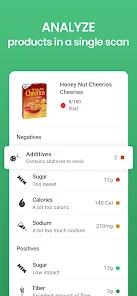
The analytical framework of Yuka is predicated on three distinct pillars for food products: nutritional quality, the presence of additives, and the organic dimension of the item. Nutritional quality, which constitutes 60% of the total score, utilizes the Nutri-Score methodology to evaluate the balance of beneficial nutrients—such as fiber and protein—against detrimental components like calories, sugar, and saturated fat. The second pillar, accounting for 30% of the score, evaluates additives based on a risk-level assessment derived from research conducted by the European Food Safety Authority (EFSA), the International Agency for Research on Cancer (IARC), and other independent scientific bodies. The final 10% rewards products with recognized organic certifications, acknowledging the environmental and health benefits of pesticide-free production.
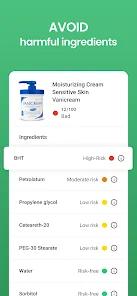
In the cosmetic sector, Yuka addresses the "information asymmetry" inherent in personal care products. The application deciphers International Nomenclature Cosmetic Ingredient (INCI) labels by assigning a risk level to every ingredient based on current scientific literature regarding endocrine disruptors, allergens, and carcinogens. This is particularly critical in regions with disparate regulatory standards, as Yuka provides a uniform safety baseline regardless of local marketing claims.
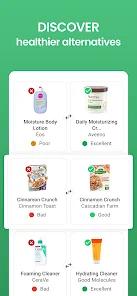
A core component of Yuka's market strategy is its "Recommendations" engine. When a user scans a product that receives a "Poor" or "Bad" rating, the application's algorithm identifies healthier alternatives within the same product category. This feature is uniquely positioned as unbiased because Yuka maintains financial independence, refusing any funding from manufacturers or advertising revenue. The project is sustained through a premium "Member Access" model, which unlocks offline scanning, manual search capabilities, and personalized alerts for specific dietary restrictions like gluten, lactose, or palm oil.
Comparative Observations
Compared to traditional nutrition applications, Yuka prioritizes qualitative safety over quantitative density. While traditional apps focus on caloric targets for weight management, Yuka emphasizes the chemical integrity of the food supply. However, a nuanced observation of the scoring method reveals a "binary bias" regarding additives. Critics have noted that the app often penalizes products for containing additives even in negligible quantities, failing to account for dose-response relationships central to toxicology. This can lead to "health anxiety," where consumers become excessively fearful of products that are generally considered safe by regulatory standards.
Pros & Cons
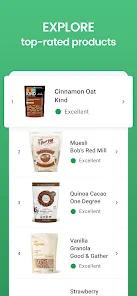
The application provides immediate, color-coded clarity (Excellent, Good, Mediocre, Poor) for complex and often incomprehensible ingredient labels.
Yuka’s 100% independent funding model ensures that recommendations and ratings are not influenced by corporate sponsorships or hidden brand partnerships.
The database is exceptionally robust, with 1,200 new products added daily through a combination of user submissions and official data updates.
The science-backed scoring system translates complex FDA and EFSA policies into actionable consumer data.
The "Alternatives" feature identifies healthier swaps in real-time, effectively serving as a personal shopping assistant.
The user interface is minimalist and high-speed, allowing for rapid-fire scanning in busy supermarket environments.
- ✕
The scoring system can be overly punitive, often rating items poorly for containing safe trace amounts of additives or sodium, which can trigger unnecessary health anxiety.
- ✕
The algorithm exhibits a perceived bias against meat products, often suggesting vegan alternatives like veggie jerky rather than healthier meat-based swaps.
- ✕
The free version lacks a manual search tool, forcing users to have the physical product and barcode present to receive information.
- ✕
Certain niche or store-brand products, particularly from discount retailers, may still be missing from the database.
Download


FAQs
How does Yuka remain financially independent without advertisements?
Yuka generates revenue through its premium "Member" subscription, an integrated blog, and a nutrition calendar, ensuring no brands can influence its ratings.
Can Yuka be used in areas with poor cellular reception?
Yes, but this feature is restricted to the premium version, which allows for offline scanning and database access.
What criteria are used for cosmetic ratings?
Cosmetic scores are based entirely on the safety of the ingredients, evaluating risks like endocrine disruption, allergies, and carcinogenic potential.
Is the Yuka score the same as the Nutri-Score seen on labels?
While the nutritional quality component (60%) is based on Nutri-Score, Yuka adds its own assessments for additives and organic status to create a final, more comprehensive rating.
How can I contribute to the database?
Users can manually add missing products by taking photos of the product name, barcode, and ingredient list within the app.
Hot Reviews
The application transforms the shopping experience by simplifying complex labels. It is particularly useful for identifying hidden "bad" ingredients in products that are marketed as "healthy" but actually contain high levels of salt or additives.
Beyond the color code, the detailed data sheets are invaluable. They explain exactly why an ingredient is flagged, citing scientific risks such as endocrine disruption or carcinogenic potential, which helps users learn over time.
Some users find the scoring too rigid, noting that even minor amounts of flours or natural additives can significantly lower a score, sometimes leading to confusion about which products are truly harmful.